

As we approach the two-year mark, I want to document some of the ‘mind shifting’ moments that have occurred since we moved in. I think I am substantially a different woman from the one who lived in the centre of the city two years ago. The topic I have selected for this first post is Ecosystem … Continue reading Mind Shifting Moments 1: Ecosystem

Beginning to Emerge: Nodding Greenhoods
I can’t claim these are the first Nodding Greenhoods to appear this season – I saw others a few days ago which seem to have been eaten before I photographed them. I hope the Swamp Wallabies enjoyed the meal. Nevertheless, it is fantastic to see the graceful flower heads rising up from the earth … Continue reading Beginning to Emerge: Nodding Greenhoods
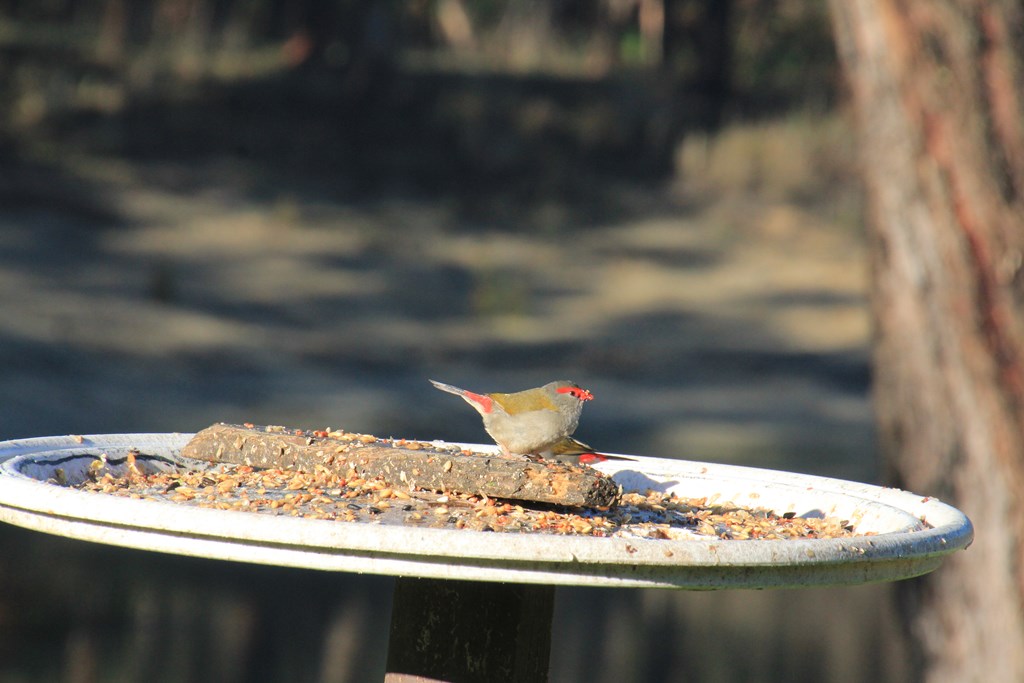
A Better Look at the Red-browed Finches
Much to my surprise, the Red-browed Finches were back at the bird feeder today, and they allowed me to walk toward them with the camera without getting too frightened. Knowing it was best not to push my luck too far, I managed to capture a few photographs which show off their beautiful plumage. The … Continue reading A Better Look at the Red-browed Finches

Wood-sorrel: Exotic or Native?
I’ve discovered there are two species of yellow flowering Wood-Sorrel (Oxalis) which look very similar, and are often confused. One is native to Australia, the other is an exotic (weed) originally from South Africa. Looking at the flowers of both species, I believe this could be the Australian native plant Grassland Wood-sorrel (Oxalis perennans). Can anyone … Continue reading Wood-sorrel: Exotic or Native?
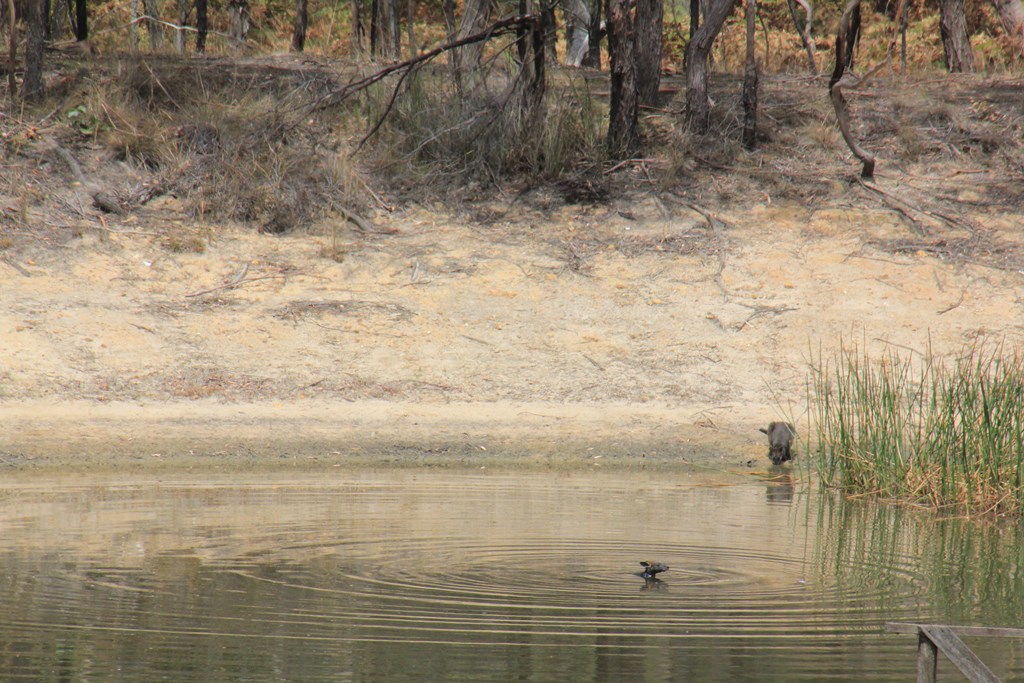
A Tragic Summer Drowning
On hot Summer days, it gave me great pleasure to see the Swamp Wallabies cooling off in the dam. They would move slowly through the water, parallel to the shore in the shallows. As they moved their hind legs, the rounded shape of their knees rising and lowering at surface level suggested the motion of a … Continue reading A Tragic Summer Drowning
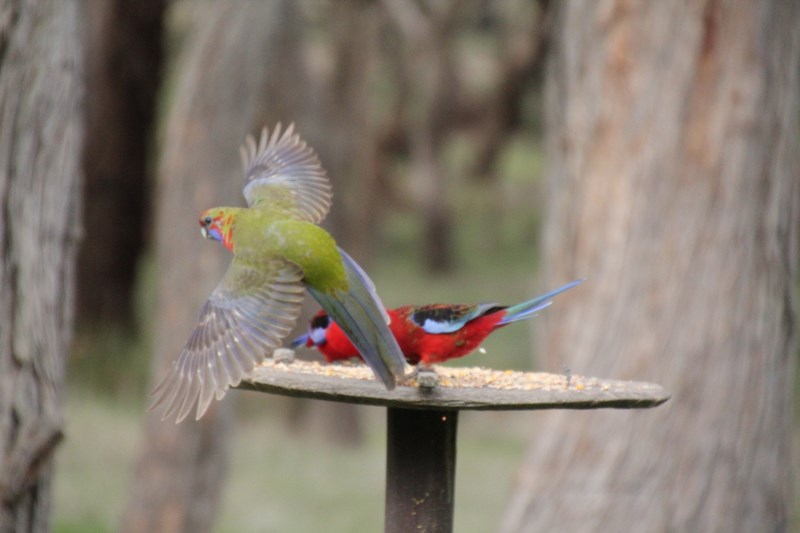
A Gallery: Twenty Minutes at the Bird Feeder
On this day, only three bird species turned up to the bird feeder, but it was still a constantly shifting feast. Each species jostles the others out of position, and it is a constant flurry of wings. Missing were the Galahs, Bronze wing Pigeons and Australian Wood Ducks. The Ducks tend to wait for the … Continue reading A Gallery: Twenty Minutes at the Bird Feeder

Climbing Sundew with Trapped Insect
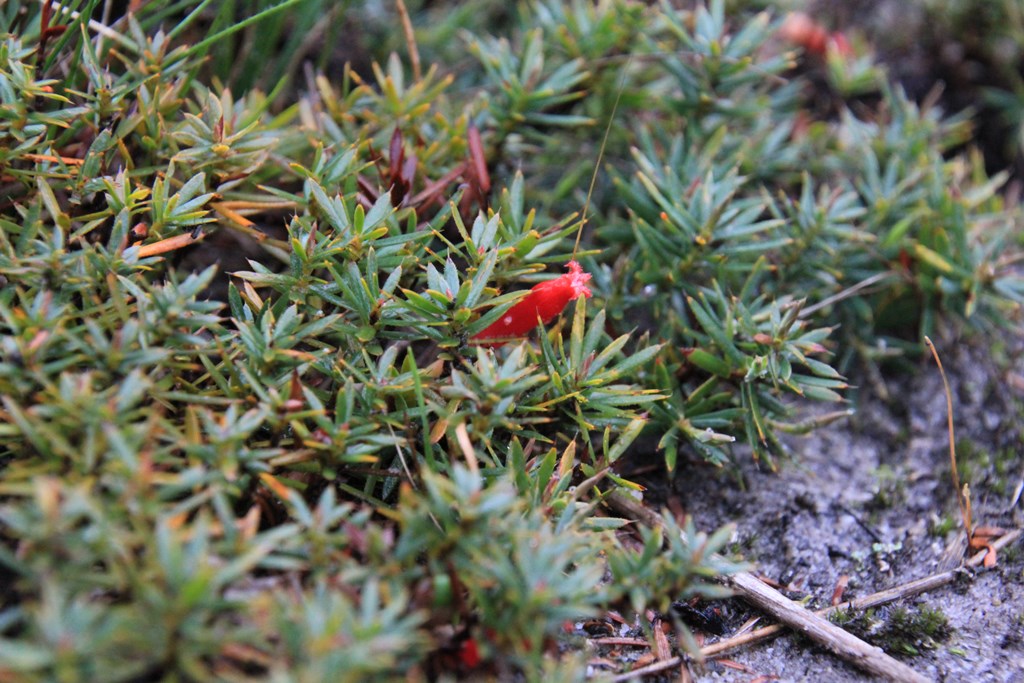
Cranberry Heath (Astroloma humifusum)
Although Cranberry Heath is already on the plant species list, I initially misidentified it, and the post is not as specific as it should be. Here are two photographs taken in June of a small Cranberry Heath plant growing alongside the dam. The red flowers are tubular, with a star-shaped opening. The Latin name reflects this … Continue reading Cranberry Heath (Astroloma humifusum)
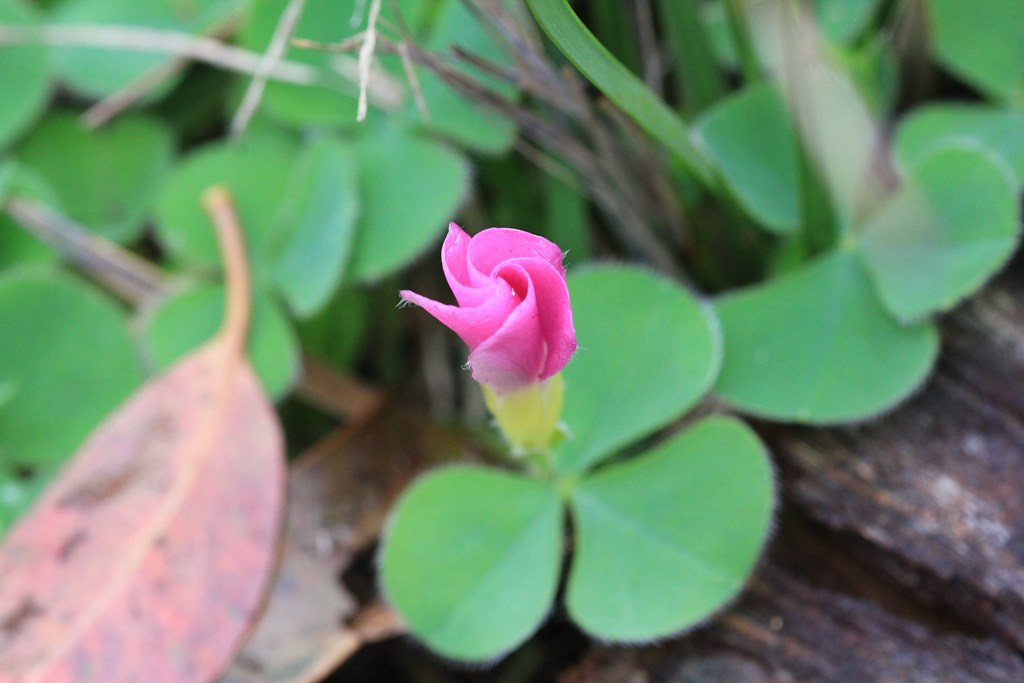
Exotic: Large-flower Wood-sorrel (Oxalis purpurea)
The Large-Flower Wood-sorrel flower looks pretty, but this plant is a weed introduced from elsewhere. We have a couple of very small patches of it this year. I think it is new as I have not noticed it before. I’ve heard that Oxalis spreads if you try to pull it out of the ground and we don’t … Continue reading Exotic: Large-flower Wood-sorrel (Oxalis purpurea)
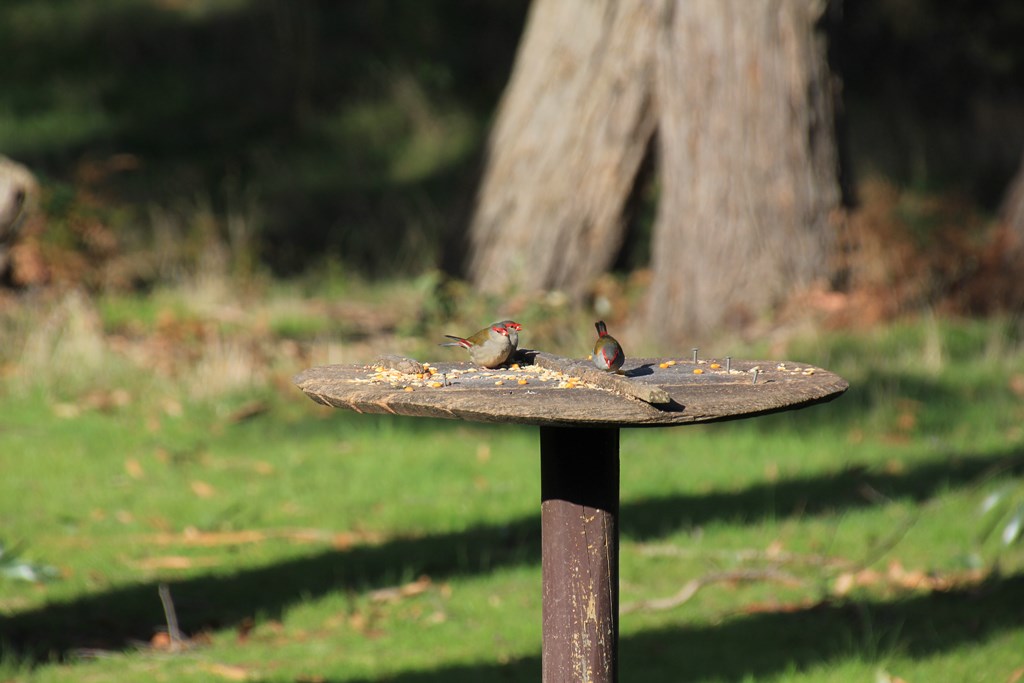
Red-Browed Finch (Neochmia temporalis)
It has been a long time since I’ve had a new bird species to add to the A-Z Native Species list, and small birds are hard to photograph, so I’m especially pleased to add the Red-Browed Finch. Technically it was Richard who saw and photographed these birds. I was somewhere else and missed them. Looking … Continue reading Red-Browed Finch (Neochmia temporalis)

First Scented Sundews of the season
I’ve been watching the buds on the tiny Scented Sundew plants grow over the last week or so, and today I’ve had the good fortune to see the first flowers of the season. Consisting of five white petals and stamens tipped in a clear yellow, these flowers are the definition of simple beauty. The leaves … Continue reading First Scented Sundews of the season
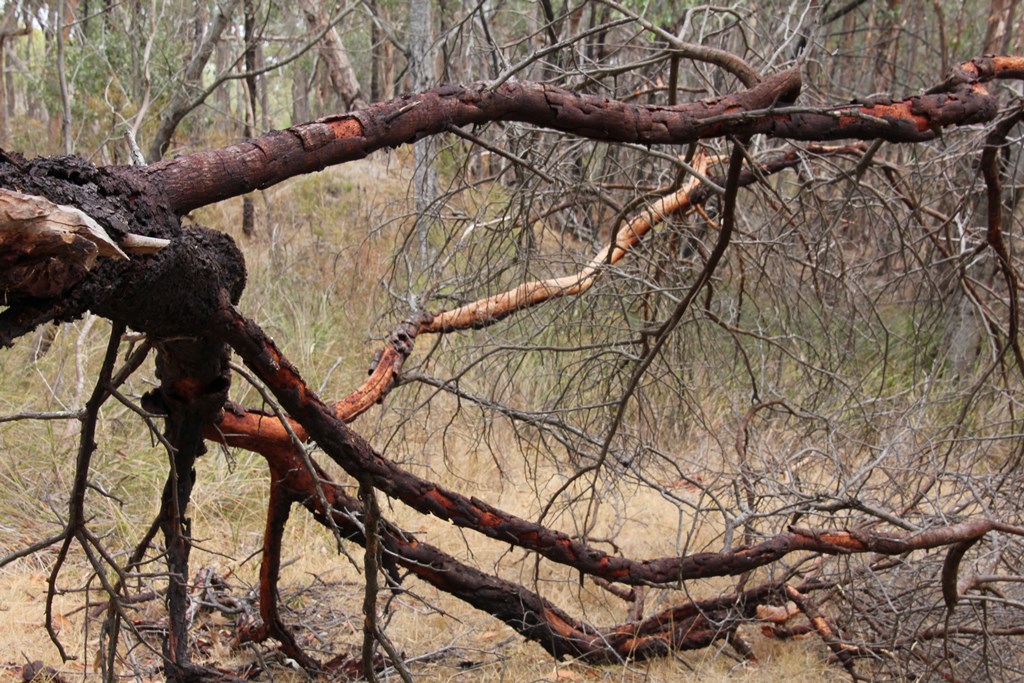
A Fallen Acacia
In Summer, one of our Acacia trees snapped its trunk about five feet off the ground. The colour of the bark and exposed timber against the dry grasses, and the shape of the branches kept drawing my attention. Today, as I was scrolling through some old photographs, I came across this one. I like this … Continue reading A Fallen Acacia
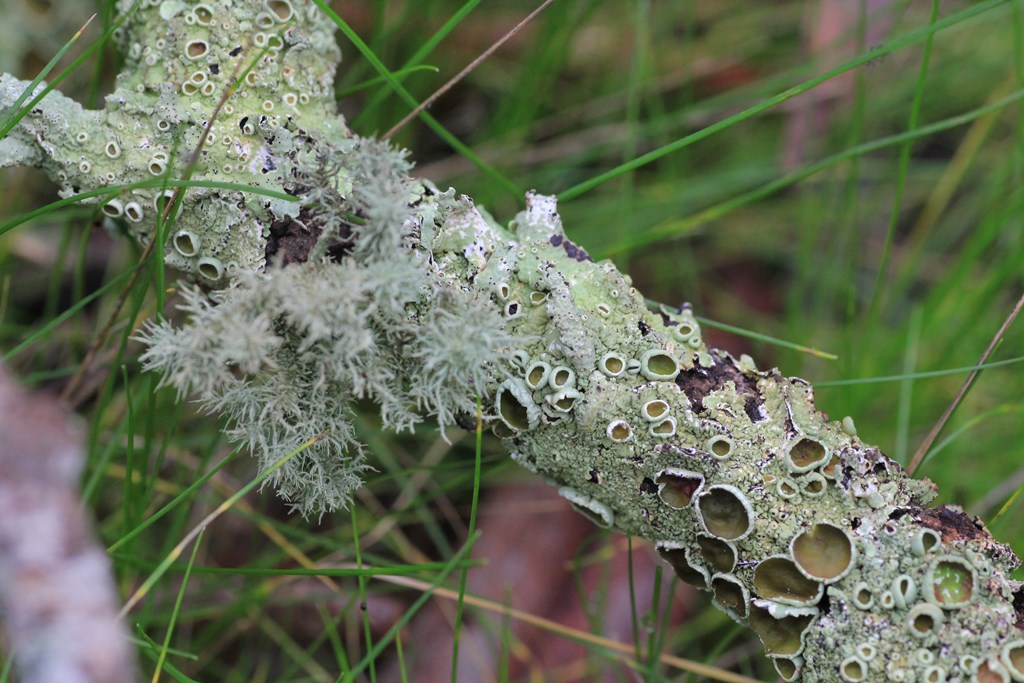
Branch with Lichen
Over the past month or so, I’ve photographed mosses, lichens and other Bryophytes we have here. While there is information on Lichen and Moss to be found on the Internet, I’m discovering that I need to know the Latin name in order to search for images I can use for identification. A slow process. I … Continue reading Branch with Lichen
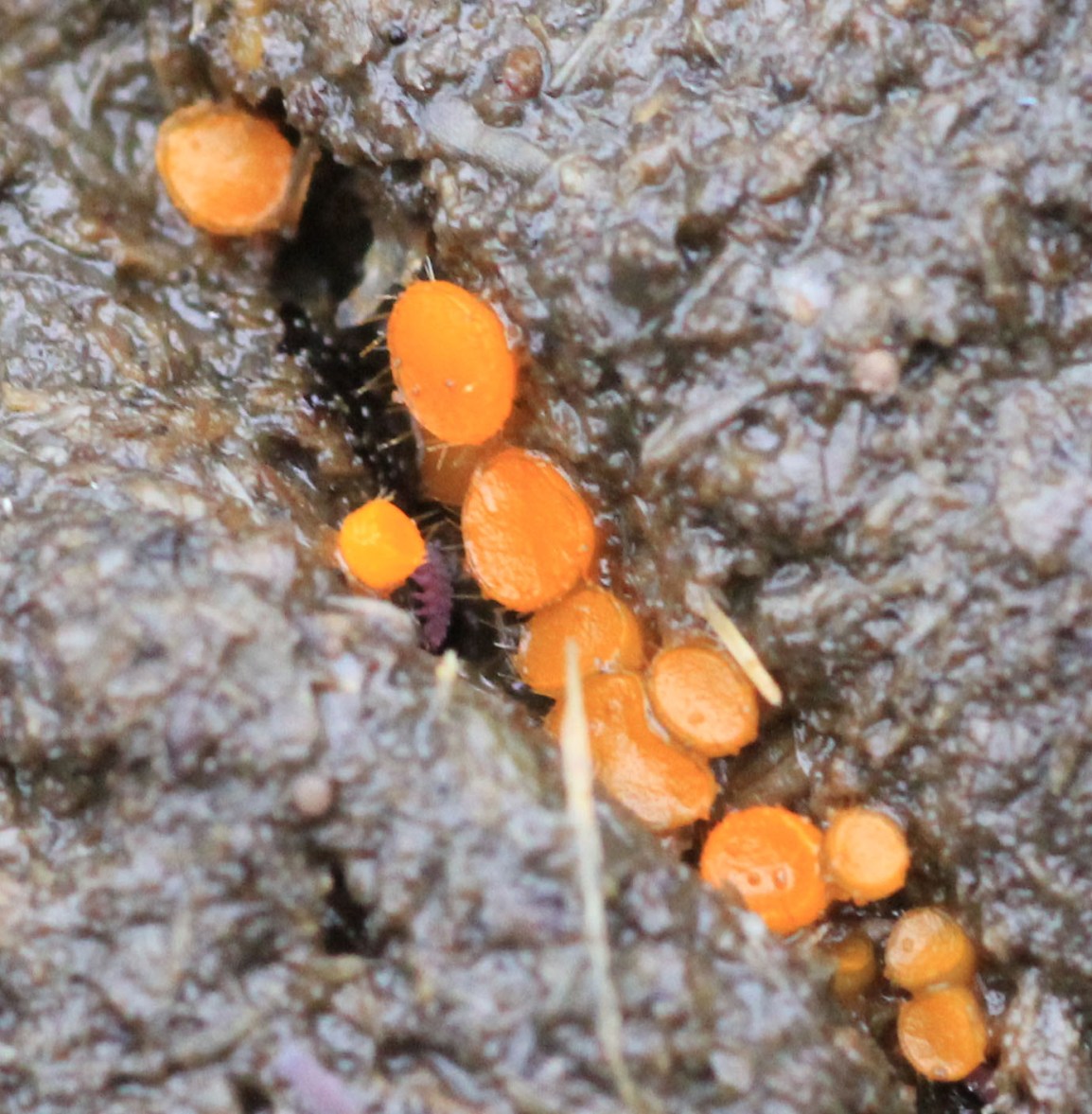
Eyelash Fungi (Scutellinia scutellata) on Animal Scat
I’m not in the habit of photographing animal scats. Yesterday, when I saw scats covered with bright orange dots, I thought it warranted a bit of investigation, so I took a photograph. With a bit of time on the internet, I discovered that the orange dots were tiny Eyelash Fungi (Scutellinia scutellata) . Thanks to … Continue reading Eyelash Fungi (Scutellinia scutellata) on Animal Scat

First Guinea Flowers of the Season
The first Guinea Flowers of the season are beginning to open. Looking at the leaves, as well as the flowers, as far as I can tell these are the Erect Guinea Flower (Hibbertia riparia). However, according to my field guides, the Erect Guinea Flower begins flowering in September. So I will check a few other sources … Continue reading First Guinea Flowers of the Season

Touching the Earth
I feel as if my patience has been rewarded – at last the kangaroos came right up the house again. I was able to photograph the fast growing new joey, leaning out of the pouch and touching the earth. It won’t be long before it is hopping around with its mother and brother.

Pink Common Heath (Epacris impressa)
Here are the photographs of the pink Common Heath flowers I wrote about in yesterday’s post. So far, I have only found one plant with pink flowers, but we have quite a few Common Heath plants with white flowers. It always seems to be a race to photograph these flowers before the Swamp Wallabies … Continue reading Pink Common Heath (Epacris impressa)
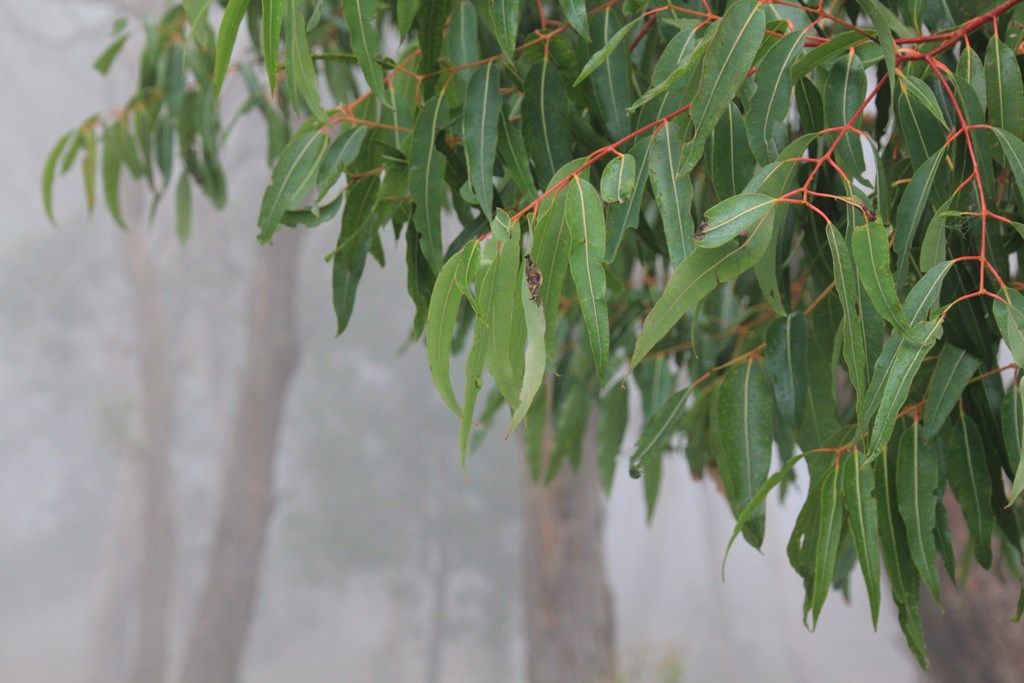
Taunting the Photographer
Good photographers make us look more closely at things we may never have considered before. They have an artist’s eye for subtle differences in light, colour, form and texture, and they’re able to frame their shots in a way that pose a question, or highlight a detail. When I first bought a good camera, I thought … Continue reading Taunting the Photographer
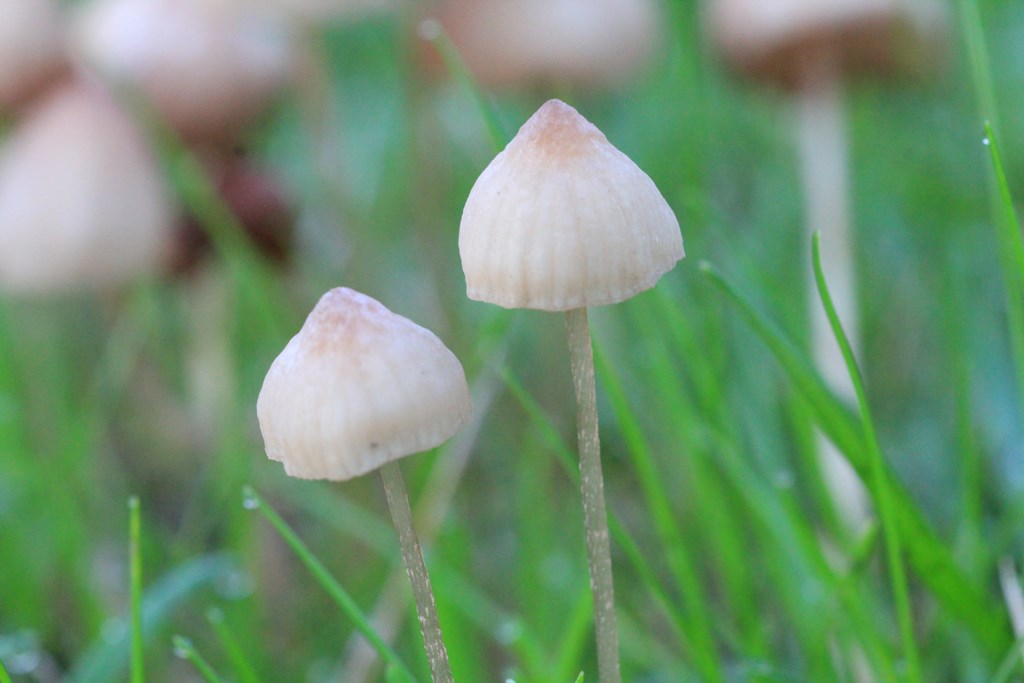
Unidentified Fungi Pt. 2
Here are a few more photographs of the fungi we have growing at the moment.

Common Heath (Epacris impressa)
Common Heath flower spikes have been putting on a good show over the last couple of weeks. We have white Common Heath flowers on our property, but there are both pink and red varietals too. When left alone by the Swamp Wallabies, the plants have grown somewhere between 30 cm and 60 cm high here, … Continue reading Common Heath (Epacris impressa)
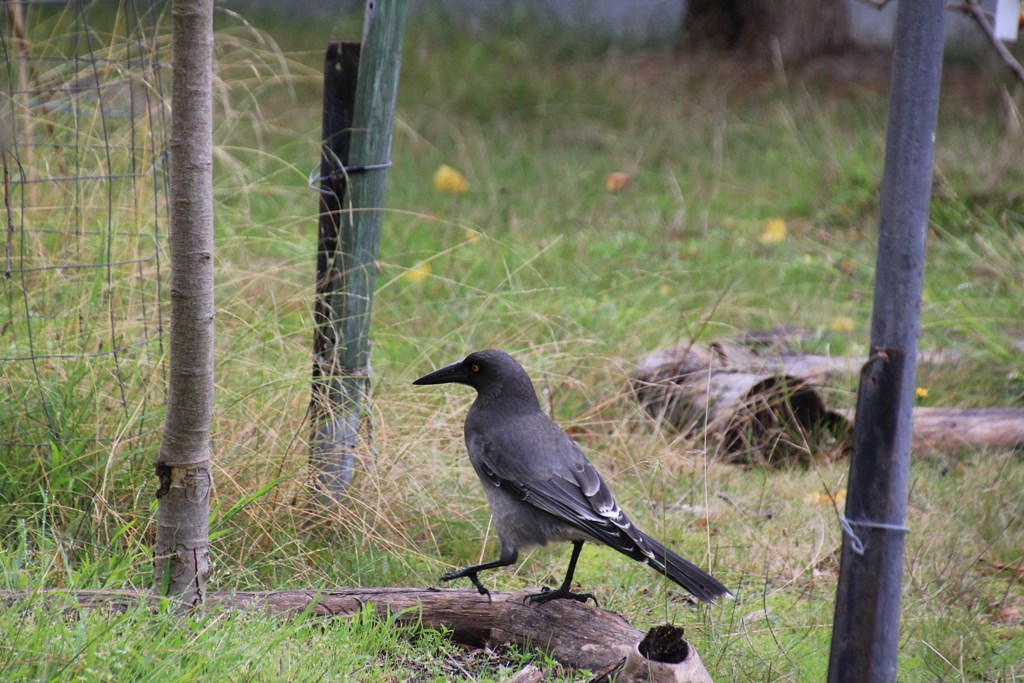
Grey Currawong (Strepera versicolor)
Last year, I photographed a Black-wing Currawong, which is a race of the Grey Currawong. Here is a Grey Currawong for comparison. The Grey Currawong has light grey colouring, with black primary wing feathers and black around the yellow eye. The bird also has white tips on the tail feathers, white tips on primary … Continue reading Grey Currawong (Strepera versicolor)
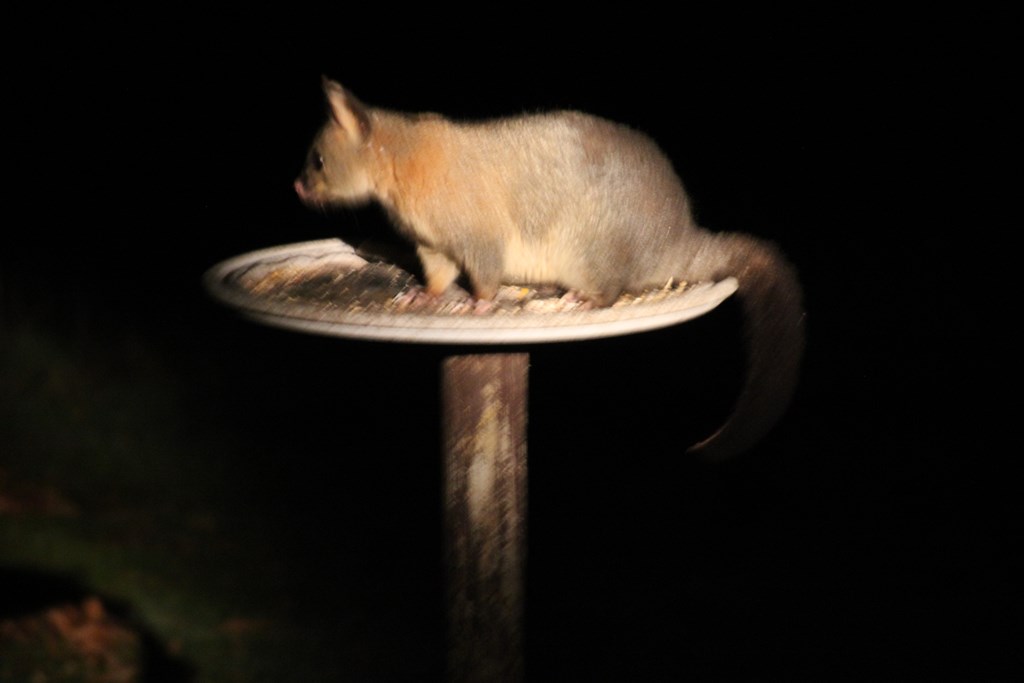
Common Brushtail Possum
I can’t believe it has taken me almost two years to photograph a Brushtail Possum! In urban areas, possums can be a pest, often living in the roof space of houses and feeding on prized garden plants. Here, we never see them because they have their natural habitat and don’t really need to come near … Continue reading Common Brushtail Possum
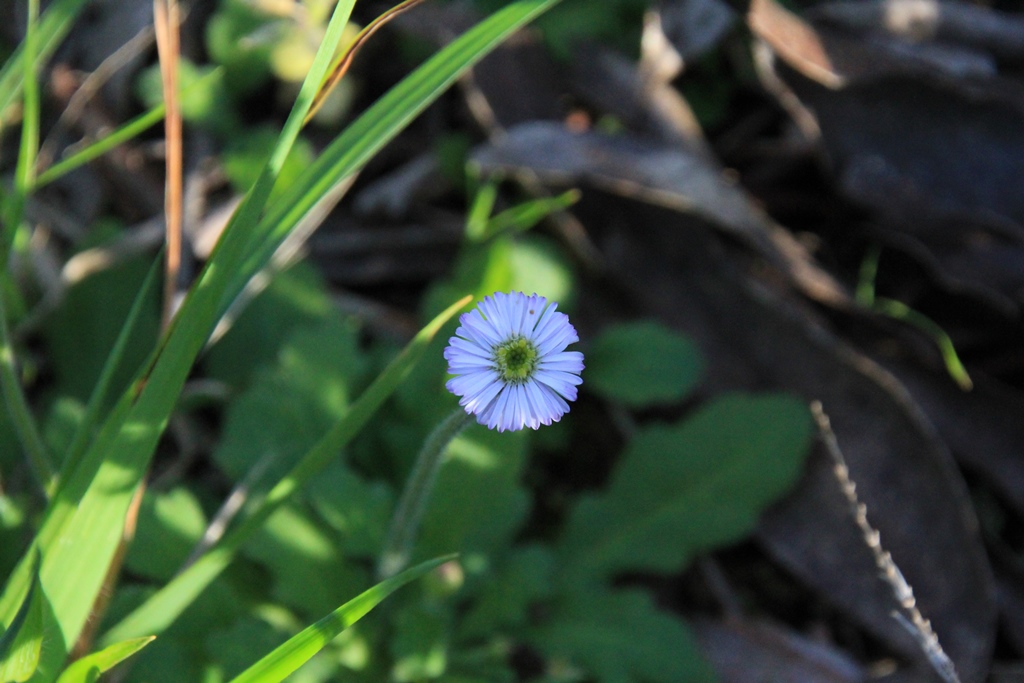
Common Bottle-daisy (Lagenophora stipitata)
While not plentiful, we had a few Bottle-daisy plants in flower last Spring. The photos below were taken at the end of October and mid November. Although a native plant to this area, compared to the showy orchids, lilies, bluebells, native pea plants and goodenia, the Bottle-daisy flowers looked quite ordinary to me. They seemed quite … Continue reading Common Bottle-daisy (Lagenophora stipitata)

Unidentified Fungi
Over the last few weeks, fungi have been showing up all over the property. The photographs that follow are just some of the species I have found. Unfortunately, I don’t have a name for any of them, but they are striking in their form and colour. Some may turn out to be the same species … Continue reading Unidentified Fungi
 Fifteen Acres