

In mid-December, when I bent down to look at a Pale Vanilla-Lily flower, I noticed these Slender Onion Orchid spikes nearby. Thankfully my friend had alerted me to look for them, or I may have just passed them over. The flowers are so tiny that they don’t immediately catch the eye. Among the information I have … Continue reading Slender Onion-orchid (Microtis parviflora)
Month: January 2014

Learning to Carol
Two young Magpies have taken to using the bird feeder as a convenient platform while learning how to carol. At the moment they produce a mix of squeaky or rasping twiddles and trills that are often grating to the ear, but over time they are developing some melodic notes. I know when they mature their … Continue reading Learning to Carol

Milkmaids (Burchardia umbellata)
Also called the Star-of-Bethlehem and known to the Indigenous Koorie population as Popoto, the cheerful Milkmaid blooms were present for most of Spring and into early Summer. We found them mostly in the bushland at the back of our property, but occasionally one or two would pop-up in other areas. A member of the Liliacea … Continue reading Milkmaids (Burchardia umbellata)
An Eerie Light
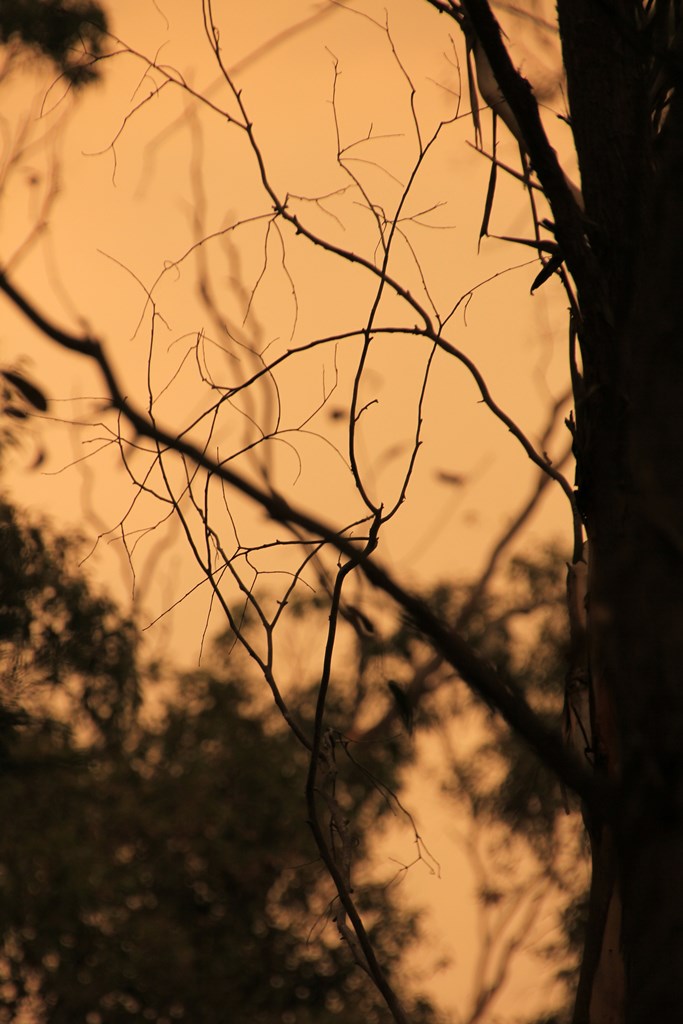
Last week we experienced a heat wave in Victoria, with highest-ever temperatures being recorded in some locations. The intense heat led to many fires across the entire State, resulting in a smoke-filled atmosphere. Fanned by strong wind, the smoke drifted for hundreds of kilometers. For a few hours on Friday afternoon, while it drifted across … Continue reading An Eerie Light
Spotted Jezebel (Delias aganippe)
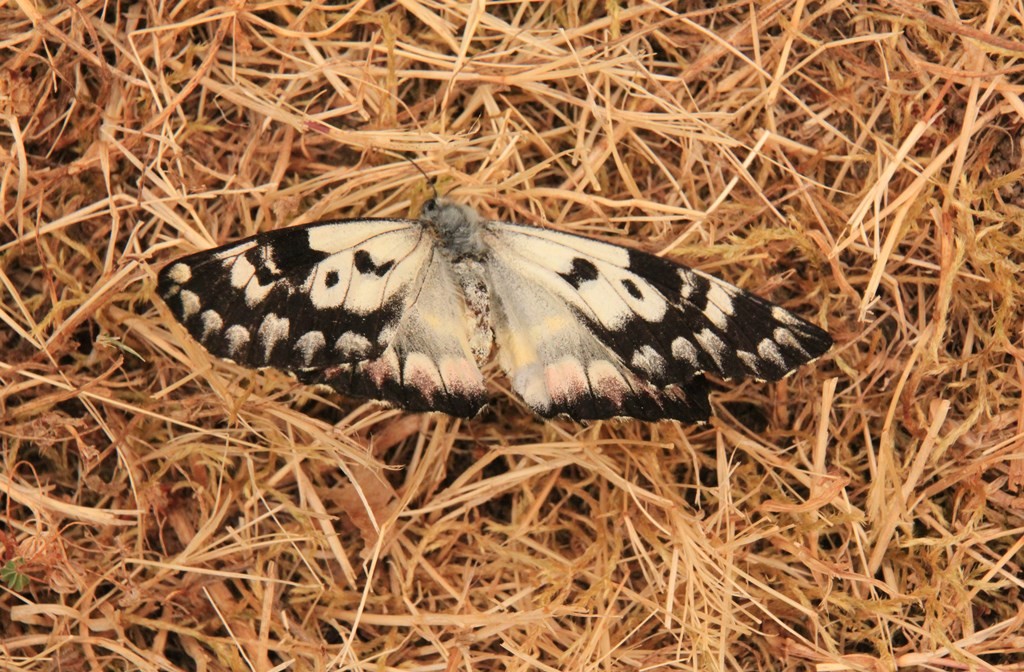
The four days of intense heat have played havoc with the butterfly population. We saw many around the perimeter of the house, seeking a cooler spot. Some of them perished in the process. When I took the first of these two photographs, this Spotted Jezebel butterfly was alive. Unfortunately, we found it dead the next day. … Continue reading Spotted Jezebel (Delias aganippe)

Twining Glycine (Glycine clandestina)
This week’s addition to the A – Z Plant Species list is a purple pea-like flower. The pea family of plants native to Australia is very large, and many species look pretty much the same. Based on our location, the fact that the flower has white patches (not yellow) the longer hairy stem, and the … Continue reading Twining Glycine (Glycine clandestina)
An Injured Red Wattlebird
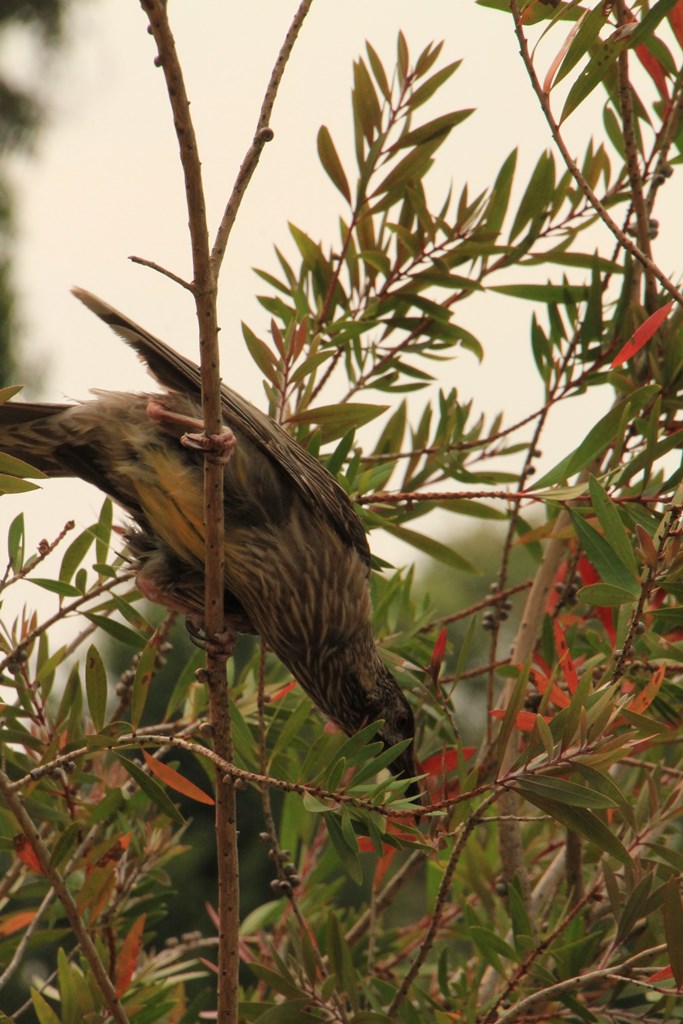
Today the light was eerie (click here for photos of the sky). I took the camera out to capture the colour of the sky, and wandered onto the jetty without looking. A fluttering sound caught my attention, and I turned to see what I thought was a fledgling Red Wattlebird running up and down the … Continue reading An Injured Red Wattlebird
Fruit!
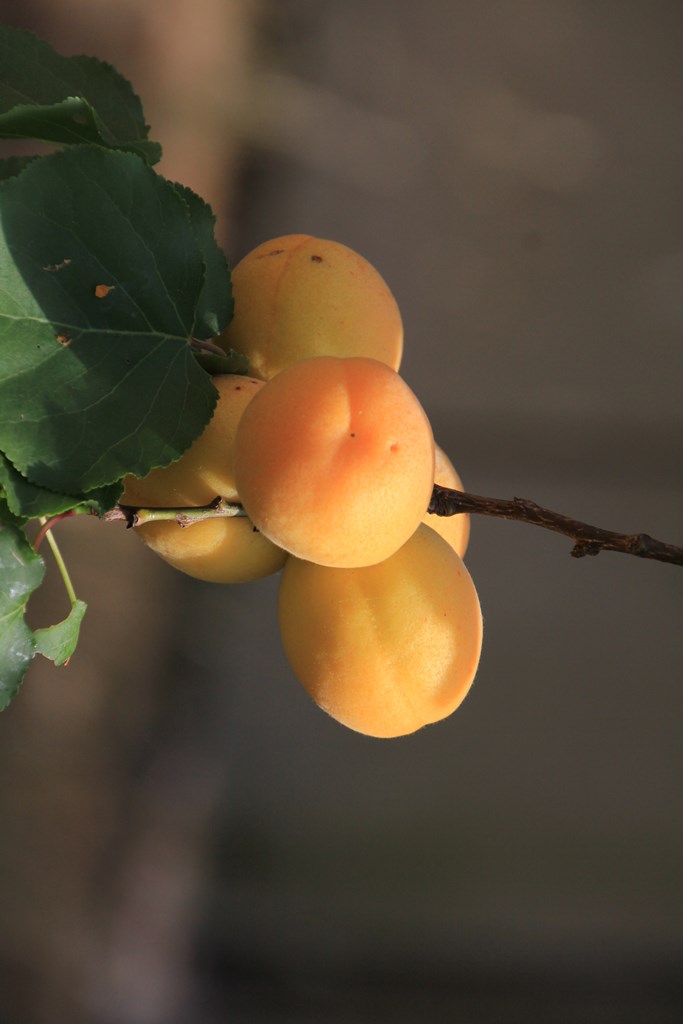
In Australia it’s mid Summer and the fruit is beginning to ripen. We are not the only ones to notice. Swamp Wallabies and parrots also have their eye on the crop, and are much faster than we are at taking advantage of ready to eat fruit! Last year we had bountiful crops that seemed to … Continue reading Fruit!

Swamp Wallaby Drinking
Last Summer on a stinking hot day I photographed a Swamp Wallaby drinking out of the dam in the afternoon. Usually, being nocturnal, we only see them at dusk or dawn. Well, another stinking hot day, and another Swamp Wallaby drinking out of the dam in the daylight. These photographs were taken at around 3:30 … Continue reading Swamp Wallaby Drinking
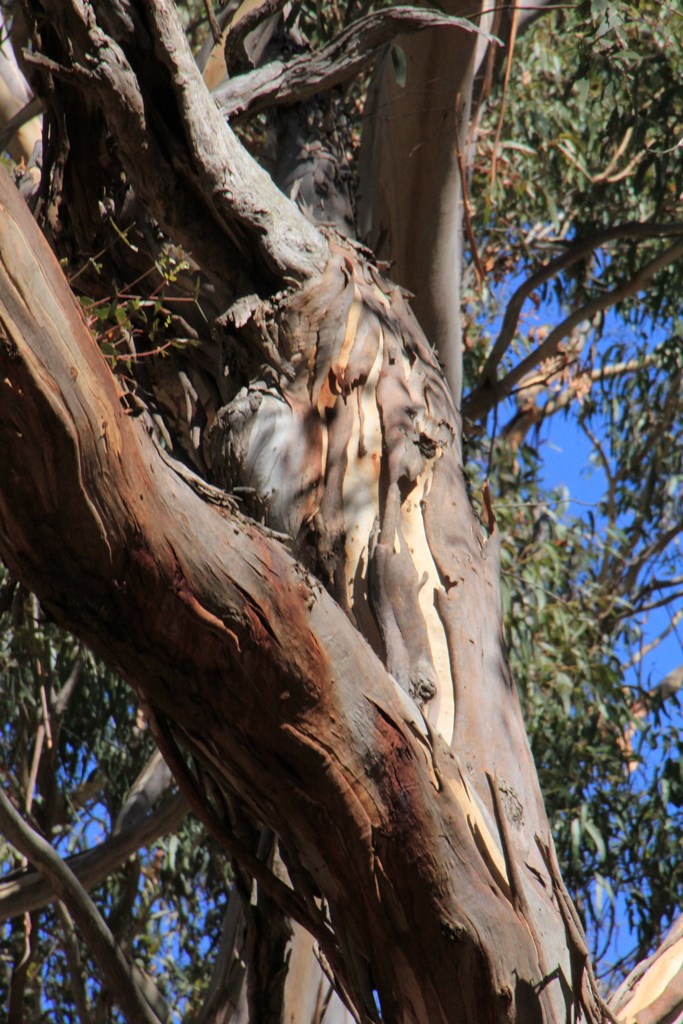
The Rorschach Tree
What do you see in the fork of this tree? For me it could be the face of an old man or the head of a lion, but I am sure there are many more interpretations. Comment below to tell me what you see! Rorschach Rorschach Rorschach

Spurwinged Plover or Masked Lapwing
I’ve always know this species as the Spurwinged Plover, but my field guide to birds tells me that they have been renamed as the Masked Lapwing. The name ‘Spurwing’ refers to the bony ‘spurs’ which the birds have on their shoulder, and which they can use for defence. Appearing approximately eight months ago, the Plovers … Continue reading Spurwinged Plover or Masked Lapwing
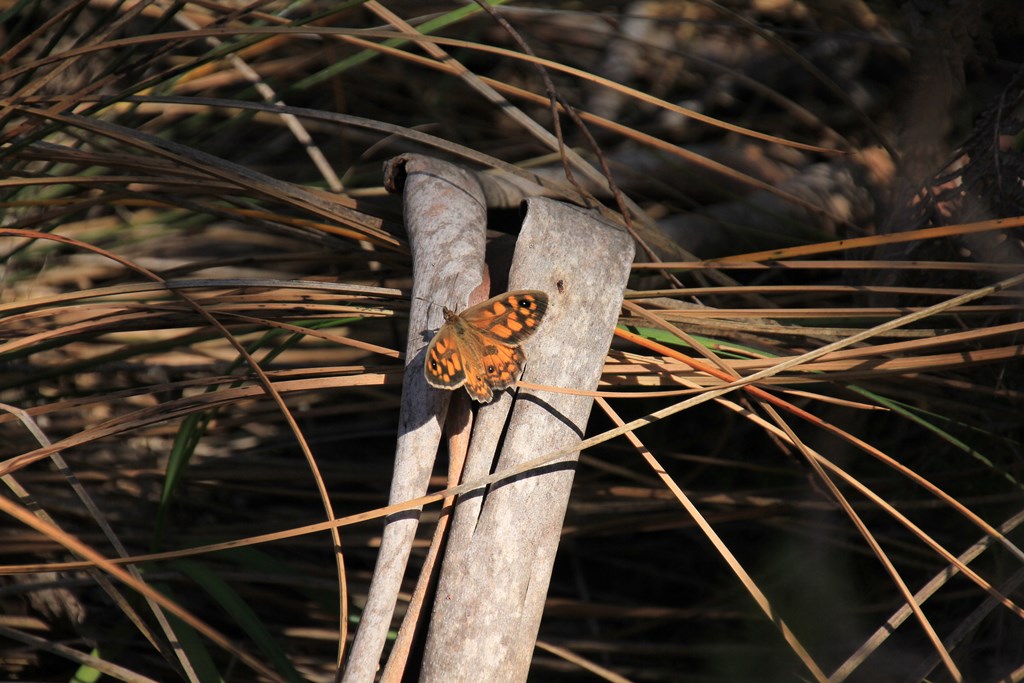
Marbled Xenica (Geitoneura Klugii)
For months now, it has puzzled me why so many butterflies hover low to the ground above bark and leaf litter, and in thick grassy areas with no flowers in sight. I’ve always associated butterflies with flowers. Thanks to a wonderful book given to me by my sister for Christmas, I can now answer that … Continue reading Marbled Xenica (Geitoneura Klugii)
Begining the Discussion: A Facebook Experiment
As my Fifteen Acres blog grows and changes, I’ve been thinking more about its central themes. I’ve settled on a couple of rules which shape my posts: Everything I write about happens on our fifteen acres of mostly bushland Through photographs and my thoughts, I’ll try to show you what I found interesting or unusual. … Continue reading Begining the Discussion: A Facebook Experiment

Western Bronzehood Orchid (Caladenia iridescens)
Commonly referred to as a Bronze Caladenia, this tiny orchid is difficult to spot. It really blends into the background! However, we were lucky enough to find a couple that were flowering toward the end of October. According to David L Jones “Native Orchids of Australia” the blooms only last from two to five … Continue reading Western Bronzehood Orchid (Caladenia iridescens)

Eastern Rosella
At last we have seen an Eastern Rosella! The Crimson Rosella is a common species on our property (we see them every day) but it’s surprising that other common species of parrot aren’t more visible. These birds were extremely shy, taking off at the first sign of movement. We saw them from a distance twice … Continue reading Eastern Rosella
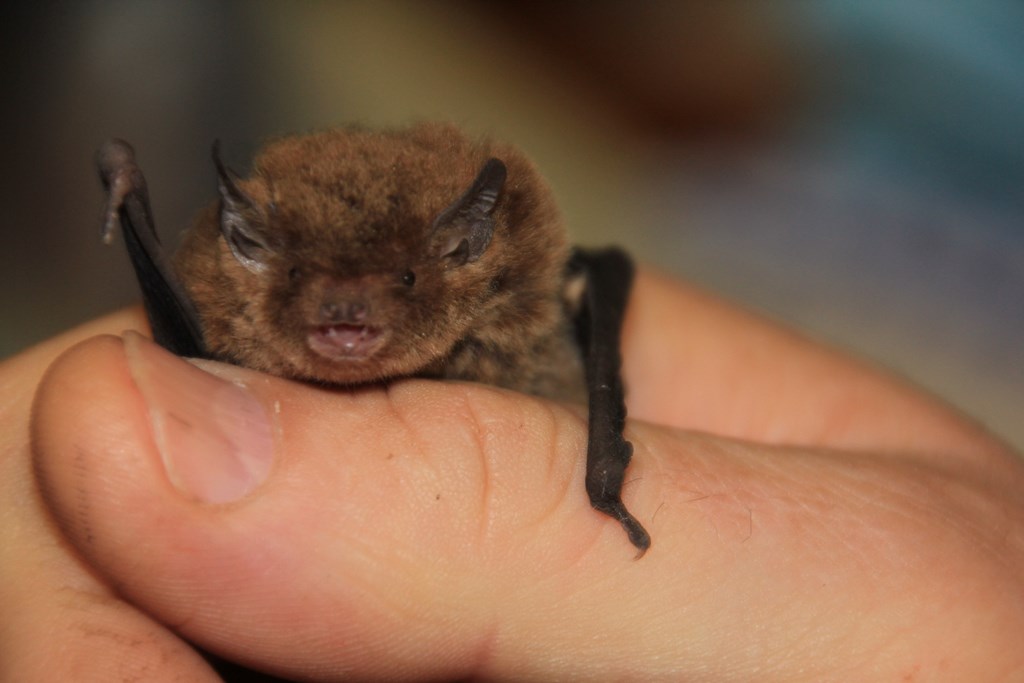
Cats, Bats and Beds at 3am
Hearing an unusual noise at 3am last night, we turned on the light to see that one of our cats had caught a bat, and was in the process of dragging it under the bed. In our half-asleep state, we noticed a second bat laying on the carpet. We’re not sure how one cat managed … Continue reading Cats, Bats and Beds at 3am

Branching Bluebell (Wahlenbergia multicaulis) and other Bluebells
Throughout Spring and Summer a range of bluebells have been flowering on the property. Some are large and beautifully coloured, while others appear smaller. Some seem to have six lobes, while most have five. I admit to having a bit of difficulty in identifying these through a lack of clear field guide photographs against which … Continue reading Branching Bluebell (Wahlenbergia multicaulis) and other Bluebells
 Fifteen Acres