

Below the dam wall grows a large patch of a wild, long, wind-blown, grass-like plant with large black-brown seed heads. It’s intimidating in some ways – the perfect hide-out for snakes and other creatures I’d rather avoid. I walk around it, and never through it. Always, it grabs my attention because there is something … Continue reading Tall Saw-sedge (Gahnia clarkei)

Two Joeys: An Update
Almost one month ago, I posted a photograph of a new pink joey’s face peeking out of an Eastern Grey Kangaroo pouch, with the promise of better photographs to come. Then the kangaroos disappeared for three and a bit weeks. My guess is that the female sought out a more protected location for the first few … Continue reading Two Joeys: An Update
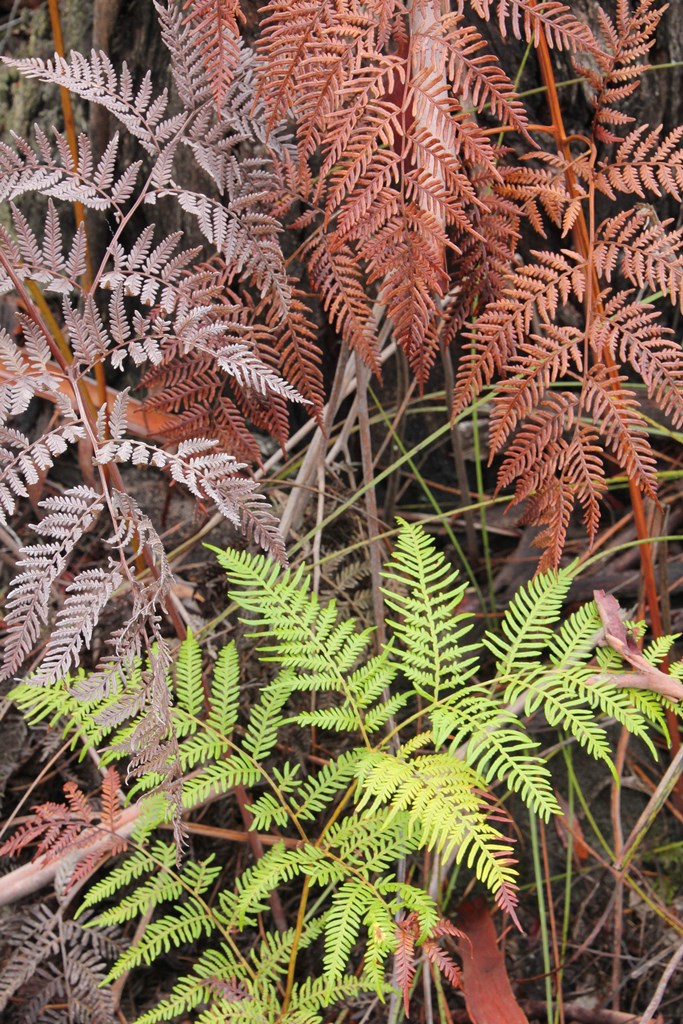
Austral Bracken (Pteridium esculentum)
Bracken is easy to overlook when compiling the A-Z Species Index because it is always there. Some people think of it as a weed, but it is a native Australian plant. I can appreciate the beauty of its fern-like form, and the various colour variation as it proceeds through the life-cycle. It also provides great cover for … Continue reading Austral Bracken (Pteridium esculentum)
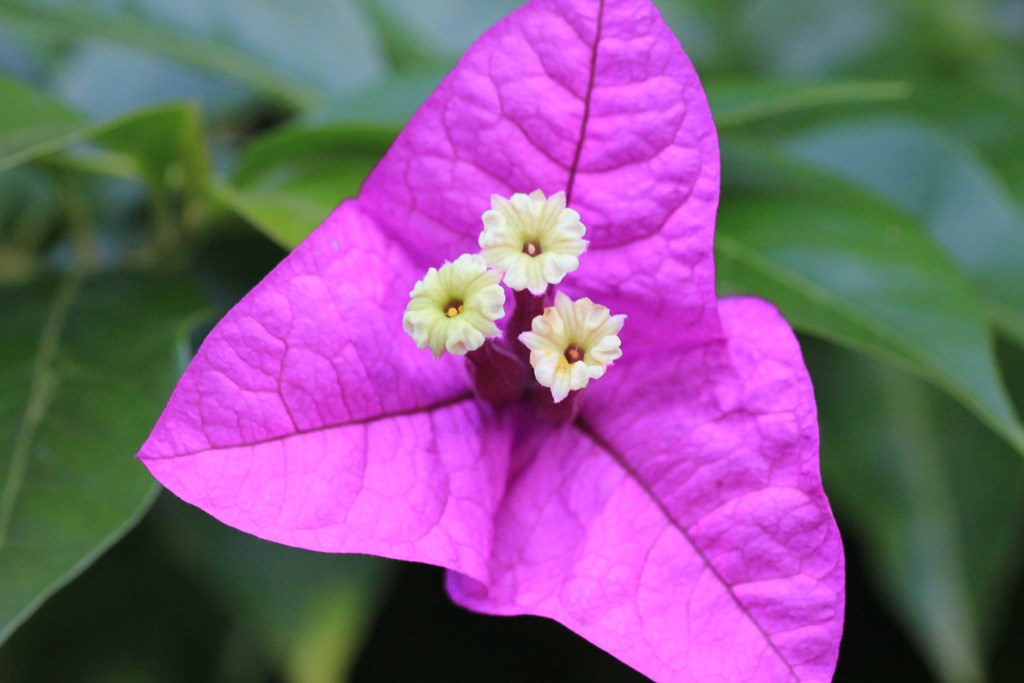
Bougainvillea
Just for the joy of the colour, here is a photograph of the Bougainvillea in our back yard. Most of the bracts have one or two white flowers, but this one has three.

Small Mosquito Orchid Part 2
Here is a photo gallery to more clearly show the Small Mosquito Orchid (Acianthus pusillus). This follows an earlier post “Small Mosquito-orchid or Tiny Gnat Orchid (Acianthus pusillus)” and several useful photography tips from Mary McAvoy. Thank you Mary! The plants in the photos below range from about 2 cm high (the leaf) to 5 or … Continue reading Small Mosquito Orchid Part 2

Is this a Helmet Orchid Bud?
I’m calling on my knowledgeable friends here. Thanks to some extremely helpful advice from Mary McAvoy (see her blog here) I was able to photograph this tiny orchid reasonably clearly. I’m not sure, but I think it may be a Helmet Orchid. Can anyone verify this? The leaves are the same size as the Small … Continue reading Is this a Helmet Orchid Bud?

Scented Sundew Leaves
Scented Sundew flowers began to appear in August, last year. As is my habit, I photographed them, identified them, and posted the photos on my blog. Prior to that, I must have walked past hundreds of Scented Sundew plants without even knowing they were there. Once identified, never forgotten – well, not easily forgotten anyway. I … Continue reading Scented Sundew Leaves

Small Mosquito-orchid or Tiny Gnat Orchid (Acianthus pusillus)
We’ve been here for two Spring seasons now. Each time, my friend BJ has told me we’re too late to see the Helmet Orchids. She was able to identify some that had finished flowering, so I know they are here. Yesterday I decided to get out my Orchid book and see when the Helmet Orchids … Continue reading Small Mosquito-orchid or Tiny Gnat Orchid (Acianthus pusillus)

Granny Moth (Dasypodia selenophora)
We found this moth in October 2013. It seemed quite willing to sit still while we photographed it. Since then, I’ve been trying to work out the species. Most of the moth identification websites I’ve found seem to be organised around the scientific names of species, so if (like me) you don’t know what you’re … Continue reading Granny Moth (Dasypodia selenophora)
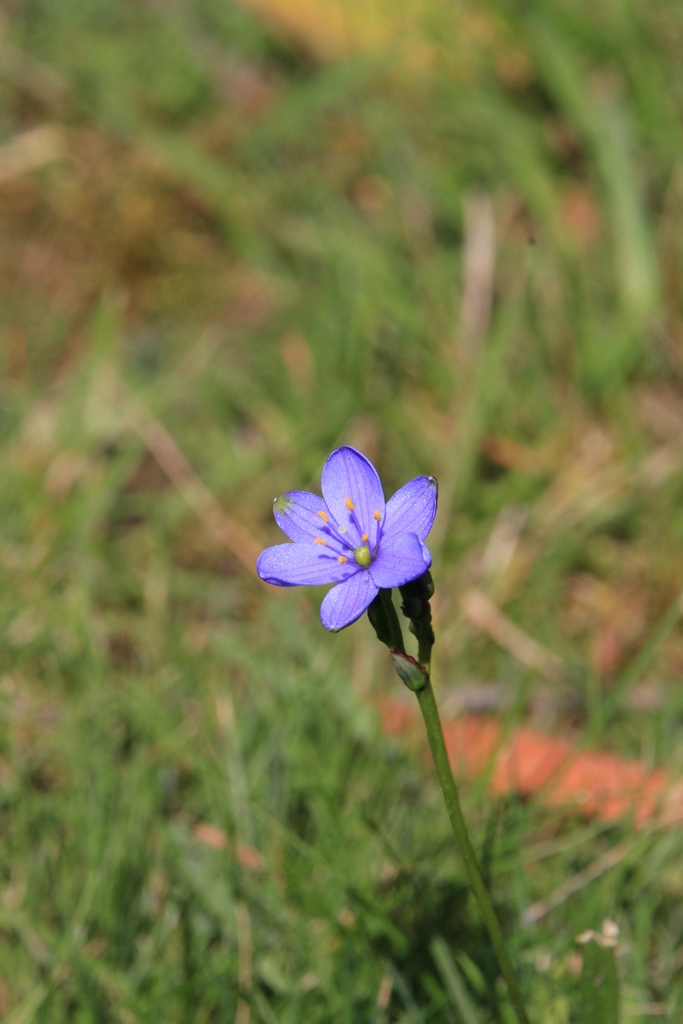
Blue Stars (Chamaescilla corymbosa var. corymbosa)
I photographed Blue Stars in September 2013, but when I look back at 2012 photographs, I have included it in the October Wildflowers series. In any case, we seemed to plenty of them in Spring, and they did flower across both months. Initially I thought this might be a member of the Lily family, but the … Continue reading Blue Stars (Chamaescilla corymbosa var. corymbosa)

A Very Tiny New Face
The Eastern Grey Kangaroos were absent over the drier parts of Summer and early Autumn. Now that it has rained and fresh green grass shoots are growing, they are back. Last year’s joey is growing fast, and now he is almost up to his mother’s shoulder when they both stand up. We knew the female was carrying … Continue reading A Very Tiny New Face

Green Tomatoes
Over Summer and early Autumn, we had great success with the tomato plants in the greenhouse. We’ve eaten tomatoes most nights, given some away, frozen some for use in Winter casseroles and stews… and still there are more! At the end of the season, we couldn’t believe the number of green tomatoes hanging on the vines. … Continue reading Green Tomatoes

Button Everlasting (Helichrysum scorpioides)
I found these Button Everlasting flowers in October and November. The plants were growing in transition zones between the grassed areas around the house and the bush. One plant was growing IN the lawn. This makes me wonder if they are naturally occurring or if they have been planted. The previous owners did plant some native species … Continue reading Button Everlasting (Helichrysum scorpioides)
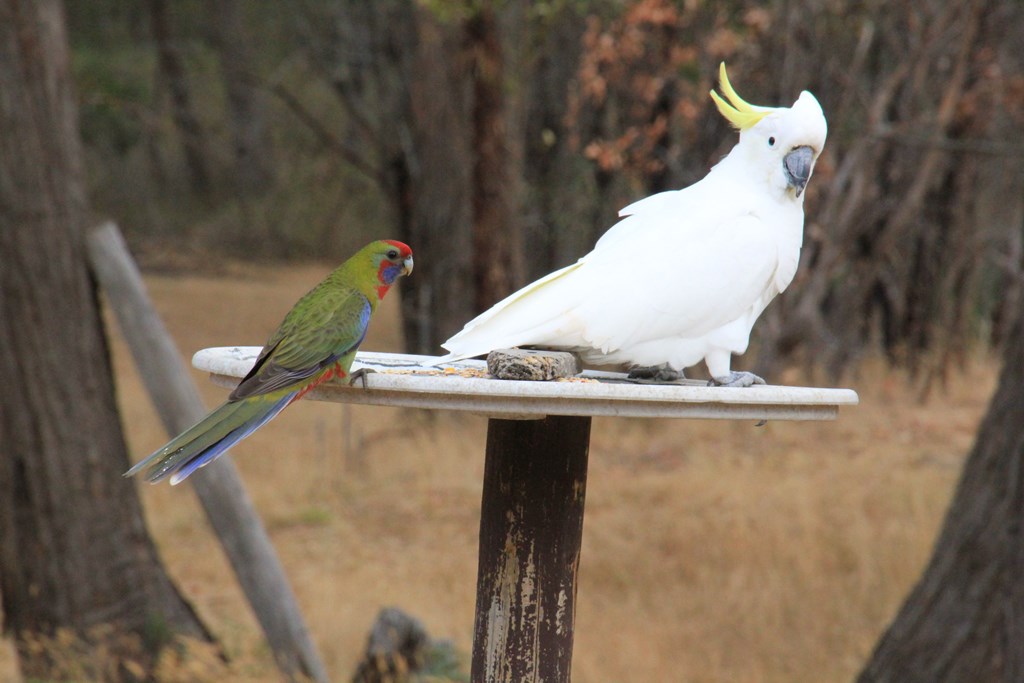
Weekly Photo Challenge: On Top
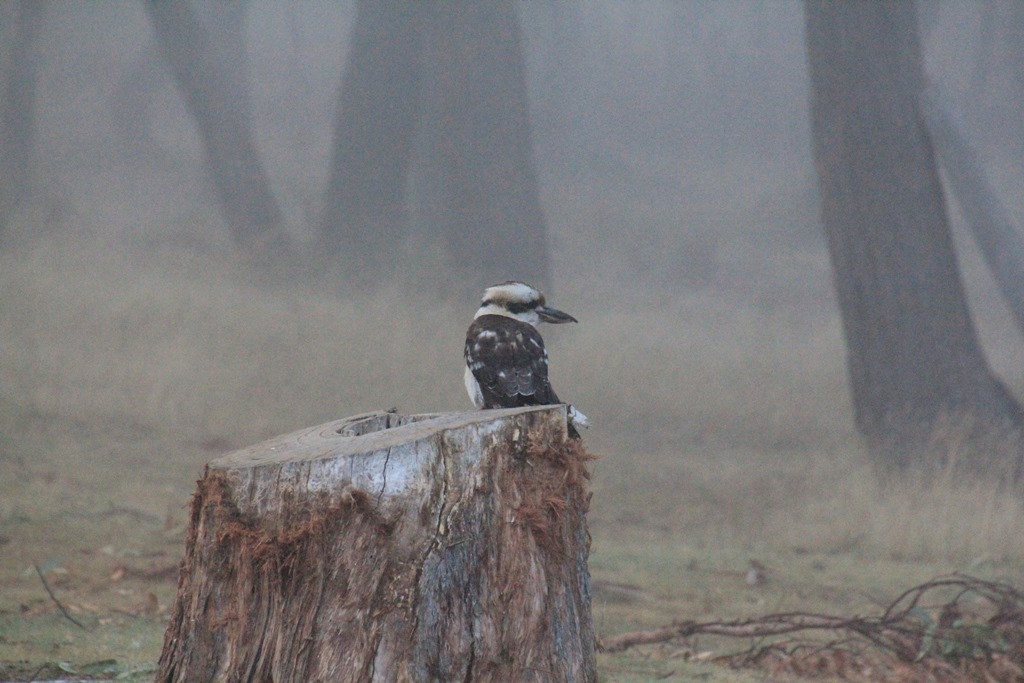
Kookie on a Foggy Morning
From time to time I’ve mentioned the Kookaburra without a tail we often see around the house. We’ve affectionately dubbed it Kookie (we don’t know if it is a male or a female). Here is a photo of Kookie on a foggy morning, sitting on the stump just next to our decking. Kookie has found … Continue reading Kookie on a Foggy Morning
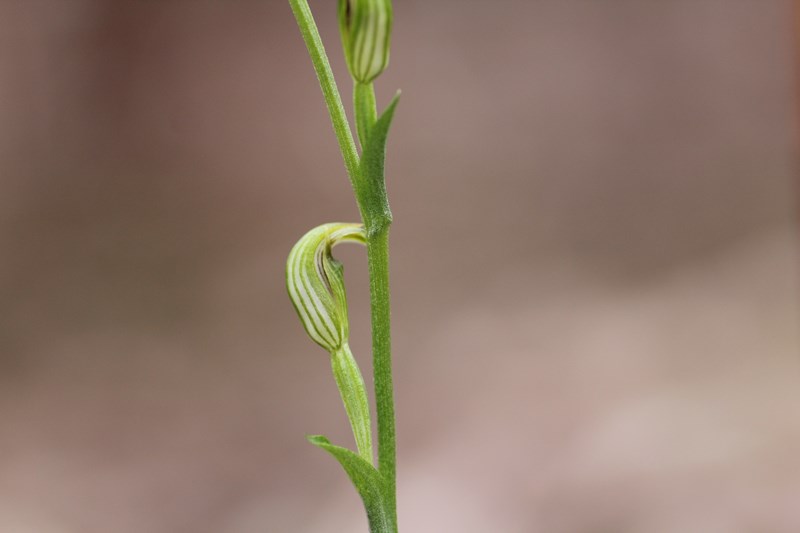
Tiny Greenhood (Pterostylis parviflora)
Yesterday during a visit, a very sharp-eyed friend pointed to something that looked to me like a small blade of grass and said “Oh look! A little Greenhood.” The other Greenhoods we have had growing here seem to appear in late Winter, or early Spring, so I was a little doubtful, but took a … Continue reading Tiny Greenhood (Pterostylis parviflora)

Fruit of the Black Anthered Flax Lily
In October of last year, I posted photographs of a Dianella (the Black Anthered Flax-lily). After the flowers finish, berries form on the plant. These are strikingly beautiful and much more noticeable than the flowers.
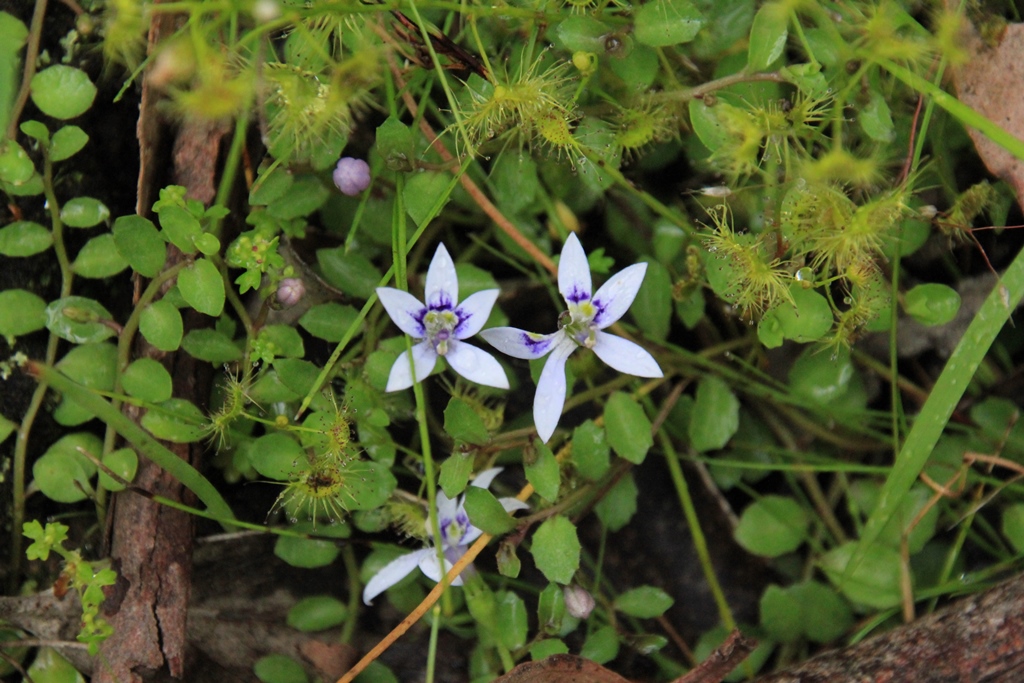
Swamp Isotome (Isotoma fluviatilis subsp. australis)
According to the field guides I consulted, the Swamp Isotome grows seasonally in moist depressions. I didn’t really think we had any moist depressions as the soil is very sandy and doesn’t hold water for long. When I think about it, the seepage from the dam probably flows beneath the spot they were … Continue reading Swamp Isotome (Isotoma fluviatilis subsp. australis)

Bird Attracting Tree
Near the house, a previous owner has planted a row of native trees that are not necessarily native to our area, but which are both beautiful and bird attracting. Today I am going to write about the second smallest of these trees, which I am pretty sure is a Paperbark, but I can’t identify exactly which … Continue reading Bird Attracting Tree
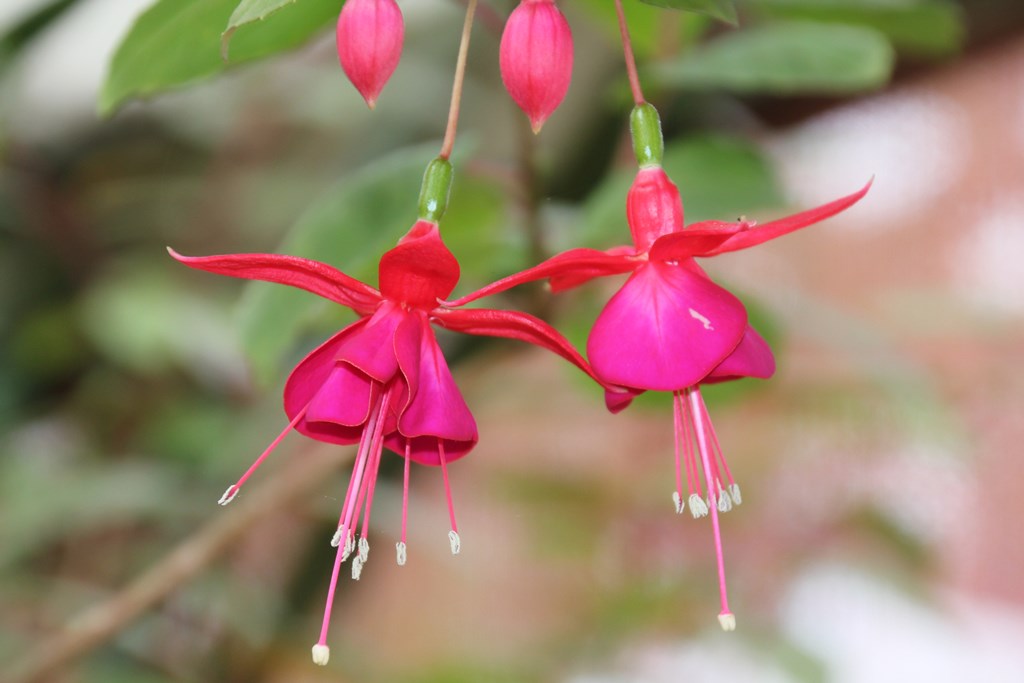
Fuchsia in the Fernery
Most of the plants in our fernery are non-flowering, so these bright Fuchsia flowers caught my attention this week. I couldn’t resist photographing them.
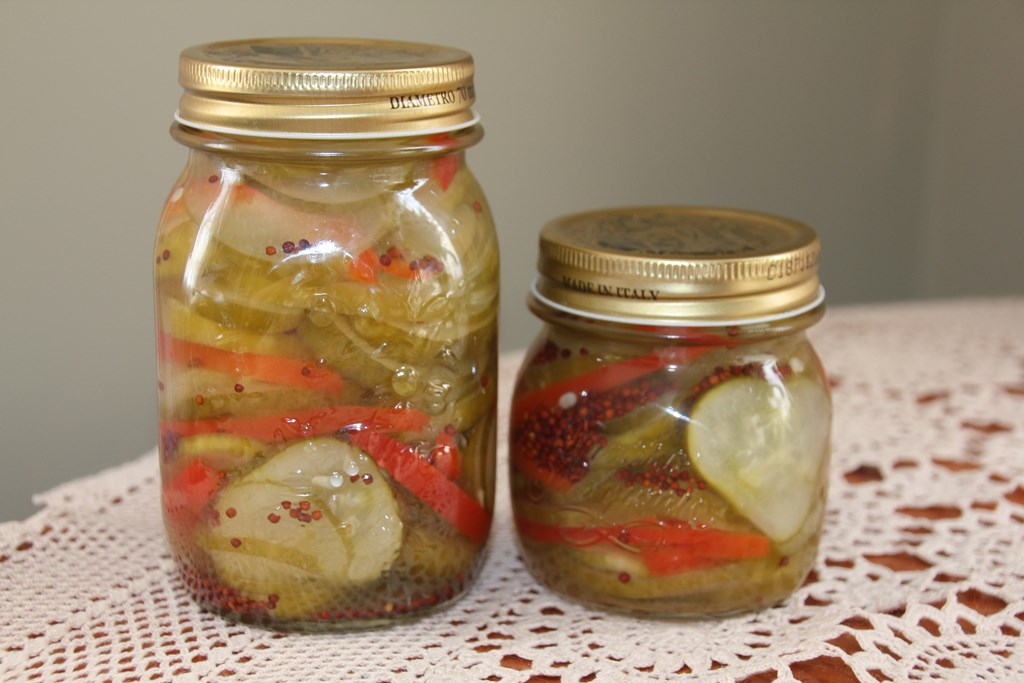
Bread and Butter Pickles
There hasn’t been any posts on self-sufficiency for ages, so I thought I would share my first attempt at pickling. I’ve tried sauces, butters and jams before, but never pickling. We had an excess of cucumbers, and the most common recipe in my cook books for using up cucumbers was ‘Bread and Butter Pickles”. Apparently the … Continue reading Bread and Butter Pickles
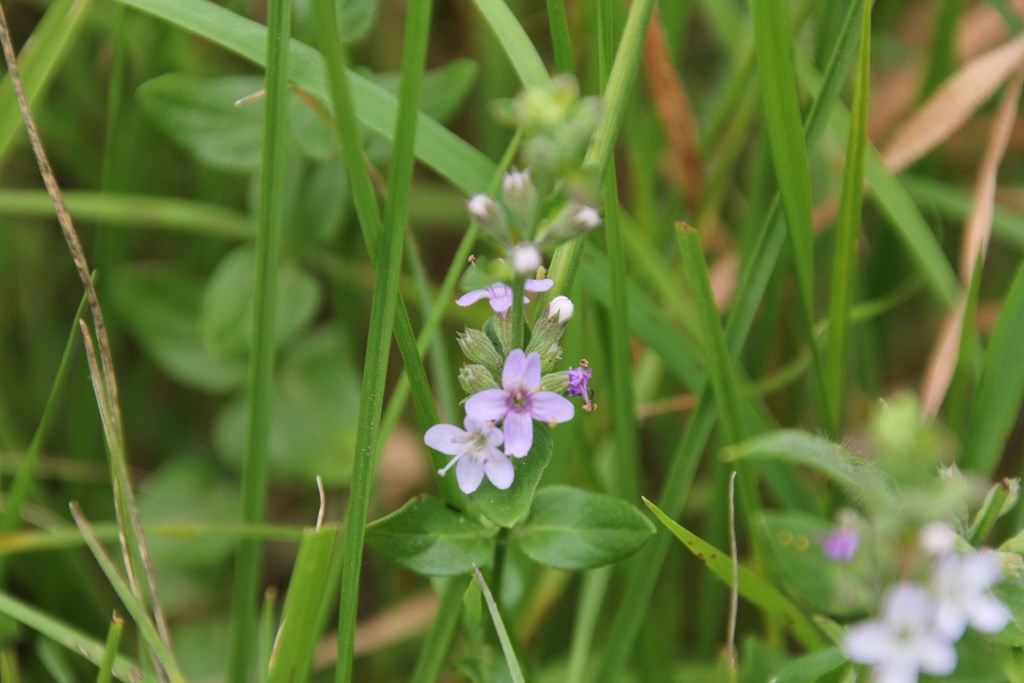
Slender Mint (Mentha diemenica)
In December when most plants had finished flowering, I noticed some pale purple flowers huddled in among long grass. Initially, identification eluded me, so I picked a leaf off one of the plants and crushed it in my fingers. It had a faint, but very distinct, mint scent. Still it eluded me as the flower … Continue reading Slender Mint (Mentha diemenica)

Jewell Spider (Austracantha minax)
I have photographed the Jewell Spider or Six Horned Spider, or Christmas Spider (among other names for this creature) previously, showing the white spots on the upper body. This time I was able to photograph the underside of the spider. The white and yellow dots indicate this is a female spider. The male is smaller, … Continue reading Jewell Spider (Austracantha minax)

Parson’s Bands (Eriochilus cucullatus)
The first Orchids of Autumn are beginning to emerge. On my walk today I found four Parson’s Bands Orchids in different locations. All were slightly off the beaten track, but not so far that I couldn’t see them while walking on a track. All were growing beneath the shelter of a larger plant. Two of … Continue reading Parson’s Bands (Eriochilus cucullatus)
 Fifteen Acres